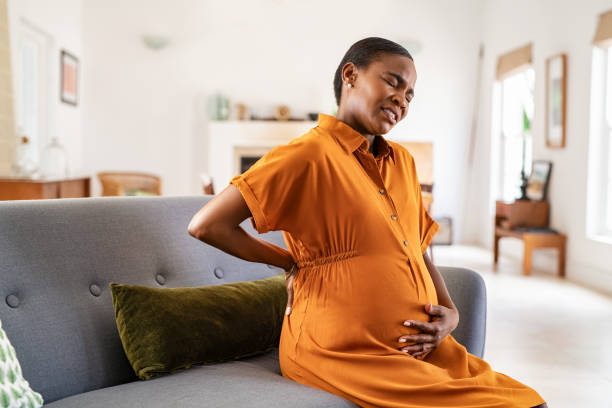
Yes, Her Fruit Perished, but She Needs Time to Heal: Addressing the Unrecognized Pain of Pregnancy Loss

Every time a woman carries life, her body begins a sacred transformation — her heart expands, her hormones shift, and her mind starts painting pictures of a future she can almost touch. But sometimes, that future never comes. The tiny heartbeat fades. The room goes silent. And the same body that carried hope now carries grief.

When miscarriage or stillbirth happens, the world around her often does not know what to do. There is no maternity leave, no baby shower, no welcome-home card — just silence. Yet her pain is real. Her body still bleeds, her hormones still fluctuate, and her spirit still aches.

1. The Role of Workplaces and Employers
Workplaces often celebrate new life but overlook those who have lost it. It is time to recognize that recovery after miscarriage deserves equal compassion and policy attention.

  • Provide compassionate leave following miscarriage or stillbirth. Rest and recovery are not luxuries; they are necessities.
  • Allow flexible work arrangements, including working from home, while the body and emotions recover.
  • Train supervisors and human resource officers to handle pregnancy loss with empathy, confidentiality, and understanding.
  • Avoid insensitive comments such as: “Feel it. You were proud of your pregnancy.”
  • Encourage colleagues to visit her at home later, with a small gift or flowers — not to discuss loss, but to show care and solidarity.
  • When she returns to work, welcome her gently and remind her that she still belongs. Care must not end where grief begins.

2. The Responsibility of Health Authorities and Health Workers
The World Health Organization and many ministries of health rightly promote paid maternity leave and safe delivery. However, comprehensive maternal health must also include compassion for every possible outcome of pregnancy.

  • Recognize post-miscarriage rest as both a medical and psychological need.
  • Include miscarriage and stillbirth recovery within maternal-health frameworks and labor policies.
  • Train health workers to treat emotional recovery as part of medical care.
  • Develop guidelines for compassionate communication in all maternal-health settings.

For Every Nurse, Midwife, and Doctor

  • Speak gently. Your tone may be the only comfort she receives that day.
  • Avoid blame or judgment. Most miscarriages are beyond anyone’s control.
  • Explain procedures clearly, ensuring she understands every step.
  • Preserve privacy and dignity. A kind word or held hand restores trust.
  • Encourage emotional support through counselling or community programs.
  • Recognize her as a mother, not merely as a patient.

When healthcare systems combine medical skill with empathy, they do not only heal bodies — they restore faith in care itself.

3. The Role of Husbands and Extended Family
When loss strikes, a woman’s body and spirit both need healing. Sadly, those closest to her sometimes deepen her pain. Some in-laws may whisper hurtful words: “If you lose another one, you will cease to be our daughter-in-law,” or “She was never pregnant; she is simply consuming our son’s money.” Such words wound far deeper than the loss itself.

What True Family Support Looks Like

  • Speak words of life, not blame. Reassure her that she remains loved
  • Acknowledge her motherhood. Even if the baby did not survive, she carried life.
  • Protect her peace from gossip and unnecessary pressure.
  • Offer practical help — meals, chores, quiet companionship. Small acts restore dignity.

Husbands: do not add to her pain by seeking another wife or withdrawing emotionally. Healing together strengthens both partners. Love is not proven in moments of ease; it is proven in how we hold one another through loss.

4. The Place of Friends and Colleagues
Sometimes, silence from friends hurts more than the loss itself. Yet careless words can wound just as deeply.

How Friends and Colleagues Can Offer Support

  • Reach out. A short message — “I am here if you need me” — is enough.
  • Do not isolate her. Invite her to gatherings or conversations. Inclusion heals.
  • Offer presence rather than advice.
  • At work, allow a gradual return, without pressure or scrutiny.
  • Visit her later with gestures of kindness to reaffirm that she is valued and remembered.

When compassion becomes a shared culture, healing spreads quietly among us all.

5. The Woman’s Own Path to Healing
Healing begins with acceptance — not of the loss itself, but of her right to feel pain and to rest.

  • Allow yourself to grieve. Tears are not weakness; they are release.
  • Seek medical follow-up for physical recovery and hormonal balance.
  • Speak to a counsellor or trusted friend; silence magnifies pain.
  • Reject self-blame. Most miscarriages are not preventable.
  • Embrace gradual healing — recovery of both body and soul takes time.
  • Remember to pray to God… He gave children to women in the Bible who had given up like Sarah among others

The loss of a child does not erase motherhood. It deepens compassion and understanding for life.

6. A Collective Call to Compassion
To every woman who has lost her fruit — we see you, we honor you, and we wish you peace. You deserve time to heal, support to recover, and dignity in your grief.

To workplaces, families, friends, and health systems — let us remember: care must also include those whose pregnancies ended too soon. A society that heals its mothers heals itself.


Address barriers to men’s participation in Antenatal care.

Journeying together for antenatal care as a couple would increase safety for the inborn baby. Accordingly, the World Health Organisation recommends that women should atleast have four antenatal care visits.

However most recent studies indicate that there is still low involvement of men in antenatal care especicially within the African region.

Some of the barriers that may be hindering men from participating in antenatal care were:

  • Some men are shy and fear to be seen by their friends while accompanying their wives for antenatal care.
  • High costs to transport the couple at once especially for people who live far away from the facilities.
  • Some men complain of busy schedules.
  • Traditionally, some men think that pregnancy and antenatal care are a female matter.
  • Fear of rude nurses and their questions.

Men’s involvement in antenatal care helps in protecting the safety of the inborn baby by:

  • It eases planning in terms of a couple being guided on which hospital and doctors that are required for the safe birth of the baby.
  • A couple is guided on how best a pregnant woman can be fed which helps the inborn baby to grow healthy.
  • A couple will be given free mosquito nets (especially in government health centres)which helps to prevent malaria that kills most pregnant women and babies. Note that most women would fear to carry a mosquito net without their husbands’ acknowledgement if they have attended ANC alone.

Ignatious Asasira a third year student of Medicine and Surgery at Makerere University gives more highlight on antenatal care. He gives further information on the involvement of men in antenatal care.

Ignatious Asasira gives more higlight on antenatal care

Indeed, men’s participation in antenatal care contributes greatly to the safety of the baby. Efforts should therefore be directed towards addressing men’s attitudes and beliefs about antenatal care. Thus in terms of radio and television adverts,as well as emphasizing advanced training for nurses to handle couples well at health centers to motivate more men to attend antenatal care.

Are men partners in child care?

In the traditional family setting, the issue of child care, that is treatment and nutrition is only left to women. Only a few men especially in urban areas concern themselves with feeding and treatment of children.

Most men in rural areas spend money on drinking alcohol or to a few who are responsible buy land or construct houses.

Some food stuff that should be added to the. children’s diet like fish, eggs, meat among others require to be purchased. Thus, only mothers who are employed are able to feed their children on a balanced diet.

Thus, it explains why children especially from rural areas are stunted and malnutritione. They are only fed with what their mothers plant on their farms, hence lacking other additional food supplement on their diet.

A similar situation trends in rural areas when it comes to child treatment. At times, some men may not even know whether their children are sick or not. Men pretend to be busy as most of them return home hours later when children have slept.

The issue of child treatment has been left to women whose efforts in most cases only end at government health centers, as they may not have enough money to go to private hospitals for additional treatment.

Men are therefore just partners to their wives by virtue of marriage vows but leave issues of child care to women.

If such tendencies are not addressed, cases of malnutrition and infant mortality will continue to prevail or even increase.

Watch the clock, save her life!

Have you ever experienced an emergency like road accidents,sick children or death of a relative? You have to act faster to an extent of forgetting what you should have carried with you to such scenes. I have seen people forget their phones among other items.

A woman in labour pain

This is the situation in which most married couples respond to delivery. A pregnant woman has all the nine months to prepare for delivery,surprisingly, the couple remains reluctant thinking there is still time.

Not only comfort, take her to the hospital on time too

That is why some pregnant mothers report to health facilities very late without all items required. When time for delivery clocks, it’s then that her husband remembers that money is inadequate and starts contacting his friends for assistance.

I agree that some health workers might be rude,but in a situation when a pregnant woman reaches the hospital late without necessary requirements, what would one expect from doctors and midwives?

Medical workers helping a woman to deliver

Whereas it is common to blame doctors in case of a maternal mortality, it is important to note that some pregnant women and their husbands contribute greatly to such deaths. In a situation where a woman would have been referred to a different healthy facility for C-Section, once she arrives late for delivery, it may be hard to refer her. It’s risky to both the baby and the mother.

Remember

  • To buy all clothes and other materials required for delivery on time
  • Save money as soon as you realise that partner is pregnant
  • Book a hospital that you wish to deliver from on time
  • If possible make arrangements with a doctor and continue reminding him of the delivery period
  • Inform that relative or friend on time. For delivery, choose someone that you are comfortable with to accompany you to the hospital.
  • Above all, arrive on time at the hospital

Treat her well, she carries life.

It is surprising that men spearhead the beginning of life of a child at conception, but still manifest ignorance that a foetus has a right to live and good care.

Most of the agonizing moments women complain about include lack of care or mistreatment they go through during pregnancy.

The State Minister for Health in Uganda said,

“Often, we blame our health workers, but the problem lies with the mothers and their unsupportive husbands who do not take them to health facilities in time. Sometimes mothers reach health centre III late, yet they are supposed to be referred to the next level where there is a doctor to perform a Caesarean Section. By the time the mother is moved from the lower facility to the next level, it is too late to save her life,” Opendi said.(The New Vision)

A number of pregnant women in Uganda are tortured and even beaten to a point of miscarriages in addition to sustaining other body injuries.

In some cases, women are made to work from the moment of conception up to birth, without any sense of relief or a helping hand from their husbands.

It’s rare to come across men especially in rural areas helping their wives with family chores. To some extent, I would argue that a few men in urban areas try and employ maids to help their wives during pregnancy.

Men want to celebrate a graduation party of children, witness their children wedding among other achievements. Yet they do not recognize that without supporting their wives during pregnancy, such achievements cannot be reached as babies may even die before birth.

Such is the support that pregnant women need.

It is not surpring that some children are raised by single mothers or even in families where both man and woman stay together, children grow closer to their mothers while resenting their fathers.

The bond is cemented when the foetus is still in the womb, as children whose mothers have been mistreated during pregnancy tend to grow up but with feelings of rejection.

Even at work places some pregnant women are mistreated or even discriminated against, for instance a recent stories that featured in CNN and BBC news. A case in the New Vision shows that some pregnant women are even denied the right to live, that is; killed by their relatives or family members.

It’s not only on graduation or winning a gold medal that a child should be recognized. The life of a child begins at conception and therefore men should take care of their pregnant wives. Better policies that allow pregnant girls to access education in schools as depicted in the Daily Monitor should also be advocated for.

Special appreciation go to World Health Organisation(WHO) for the work well done; @WHO . You have worked greatly to improve antenatal care services to pregnant women.

For more information contact me on social media:

Facebook

Twitter

LinkedIn

Are women comfortable to breastfeed in public?

A number of women express mixed reactions when it comes to breastfeeding while in public places.

To some women, it is shameful to breastfeed in public and thus would not expose their breasts during breastfeeding.

In a rural setting however, women openly expose their breasts while breastfeeding and it seems normal to them. To such women, even if they are in the midst of many people like a meeting or congregation, they find it easy to breastfeed their children in public without caring about who is looking at them.

To women who find it hard to breastfeed in public they could adopt the following tips:

  • Move a short distance away from people so that you can breastfeed the child comfortably.
  • If a meeting is short, try and breastfeed your children from home so that they do not get hungry in public.
  • A child who is six months and above may be fed with enough food that can keep him satisfied thus reducing chances of breastfeeding in public.
  • *If it is a work environment, the breastfeeding mother may talk to her supervisor so that she is allocated a better place and time to breastfeed her child to satisfaction.
  • *A mother may resort to milk bottles that she may carry milk for a baby to depend on while in public.
  • *Using a piece of cloth may also be help so that a breastfeeding mother is able to cover her breasts while breastfeeding.
  • *Finally, if the baby is six months of age or above, a mother may breastfeed and leave him or her at home with a caretaker. Breastfeeding may resume when the mother returns home later, but this is effective when appointments or meetings are short so that the baby is not starved at home.

In all conditions, mothers should be given ample time to breastfeed their children in public.

Enlighten rural women on immunization.

Ever tied a piece of cloth on your face and begin to walk? That is the state in which women in rural areas attend immunization. There seems to be a veil covering women’s faces in rural areas.

Accordingly, some of the immunizable diseases are; Polio, Tetanus, Whopping Cough, Diphtheria, Tuberculosis,Measles among others. Each has its vaccine, time and part of the body to be administered .

A child receiving a vaccine at a health facility

However most women in rural areas only know polio of all in immunisable diseases. If a woman in a rural area is seen heading for immunisation, try and inquire where she is going, her answer is always, “I am going for polio”.

Though women in rural areas appreciate the fact that immunization is important, they believe that it only gives a remedy to one disease which is polio.Majority of those women who attend immunisation in rural areas do not know how to read. There fore it would be hard to realize what kind of immunisable disease are written on the immunisation cards of their children.

Penlope Musimenta a 34 year old, resident of Kagunga village in Bufundi Sub county in Rubanda district attends immunisation for fear of being abused by nurses, otherwise she would have dodged some of the sessions. Penlope admits that she considers immunisation as a wastage of time and inflicts pain on a baby yet its only a measure to prevent one disease which is polio.

Such ignorance in rural women explains why some of them do not complete all the required vaccines for their children.

In an up close with Dr Robinah Nakawunde, she highlights immunisable diseases, the body part as as well the age at which the vaccine is given to the baby. She works at China-Uganda Friendship Hospital Naguru.Featuring in an audio clip below, is Dr Robinah giving details on immunisation.

Dr Robinah Nakawunde giving details on immunisable diseases

Efforts in form of campaigns, radio talk shows and adverts should be put in place to help rural women understand immunization broadly. Or else more children will continue to be victims of these immunisable diseases despite the government’s efforts of availing immunization services for free across the country.

Guide maids on child feeding.

A woman guiding a maid on how to feed her baby

New trends have come in across the whole world where women go out to work, leaving children under the care of maids.Such mothers should cautious to find out whether their children are fed to satisfaction and also guide maids on child care and feeding.

According to UNICEF, at six months of age, a baby needs more than breast milk to continue growing. There fore, start giving the child additional appropriate food at six months while continuing to breastfeed until the age of two years and beyond.

A health baby is a result of good feeding

Maids should therefore be guided on how to prepare food for the baby. Such foods such as smashed vegetables and chopped meat, eggs or fish should be added to the child’s diet as often as possible.

Recognising that a child’s stomach is still smaller than the adult’s, a child can not eat as much at one meal. Such should be explained to the maids so that they do not see constant feeding of the baby as a punishment to them.

Some children end up being beaten by maids once they ask for food.

Women who guide maids and keep a good relationship with them have registered benefits of their children being looked after well. As a mother try and find out whether the maids are facing any challenges at home during your absence.

If a maid is new to work, guide her to where food is kept in the house, how to use some equipment in preparing meals for babies, never assume that maids know it all.

Above all, mothers should give a helping hand to their maids while at home. On evenings, a mother may help and buy some of the food the maid may need to feed the baby like pumpkin,ovacado, tomatoes among others. During weekends when working mothers are free, they should give maids some time to rest, they are also human beings.

A mother may also help in feeding the baby once she is free
Continue reading “Guide maids on child feeding.”

Clothes matter to babies too

Whereas mothers are always excited about babies and buying them clothes, one should be careful since some attire and designs have negative impacts.

Choose organic cotton clothes

Some clothes have dangerous chemicals that may be harmful to a child health. Don’t be in a rush to buy a cloth because it’s trending, think twice

Additionally, it is good to avoid new born clothes with beads, ties, drawstrings and attachments. They may choke the babies in case swallowed or strangle them through the neck will sleeping.

Every mother wants to keep her baby smart and warm but mind the material. Some clothes are good especially if manufactured from organic cotton and thus highly recommended for purchase.

Remember to put an aspect of color in mind. Dull clothes may be worn for casual while at home and bright colors for public like churches, yours, meetings.

Are night mosquitoes the only dangerous insects?

Babies resting in nets.

Is there any one who has full control to limit harm from reaching children? Some scenarios are hard to predict and thus child nets should be used not only at night but also the day time as well.

Get a net and guarantee safety all the time

Majority of the people think that those mosquitoes that move at night only are risky insects that spread malaria. This is a belief held by most people in villages.

The Urban women to some extent try and ensure that their babies sleep in nets even during day. This is surely a good idea and it’s helps to prevent babies from other bits like, stings of wasps and bees, red ants among other insects.

A child can be kept busy but still safe in a net

Additionally, such nets help babies to survive unnecessary dust and any other dirt that would have entered their noses. Such helps them to survive constant flue and cough.

While planning to move, parents may also opt for baby carriers that are netted on top. It’s possible that outside germs from dust and other infected people are many. So babies’ safety should be a priority all the time.

During a walk, such a net is useful

In rural areas sanitation levels are poor evidenced by dusty roads, poor drainage systems among others. During the campaign to distribute mosquito nets to each house hold, the government gave out only larger mosquito nets that remain static in bedrooms. It’s there fore risky to children’s health.

Yes it’s the duty of government to protect it’s people, but now let every parent that’s has a toddler try and get nets for safety. It’s not only mosquitoes

Let every parent protect babies from bites

Its not only night mosquitoes that are harmful to the babies, let’s guarantee safety by buying flexible nets that may be used even during day time.

Create your own website, free on WordPress.com.Create your own website.
Start free